Premium Artificial Grass Supplier & Installers in London
Supply & installation

Professional Artificial Grass Installation in London

London Grass specialises in the supply and professional installation of Royal Grass artificial lawns throughout London and surrounding areas.

From replacing an existing lawn to installing artificial grass on patios, balconies and roof terraces, we provide a complete installation service tailored to each property.

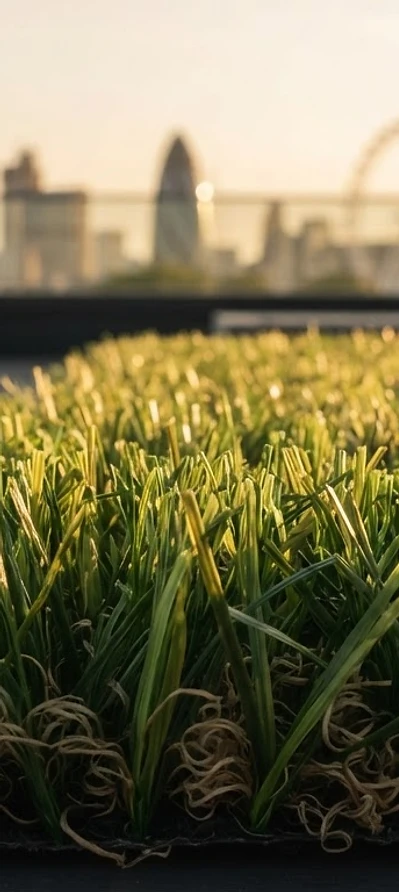
Royal Grass artificial lawn freshly installed in a London garden

Three ways to install

Buy the grass and fit it yourself, hand the whole job to us, or have us fit grass you have already bought.

01

Supply only

Purchase Royal Grass directly from our online shop and install it yourself or through your own contractor.

  • Choose your artificial grass from the Royal Grass range
  • Select the roll dimensions and cut plan
  • Calculate the required quantity for your measurements
  • Add installation accessories, tape, adhesive and infill
  • Arrange delivery or collection
02

Supply & installation

Our complete professional installation service, from the first site visit to the final brush-up.

Includes, where required

  • Site assessment
  • Removal of existing turf
  • Ground excavation and preparation
  • Disposal of excavated material
  • Installation of a suitable compacted foundation
  • Surface levelling
  • Installation of Royal Grass geotextile
  • Artificial grass installation
  • Professional joining and trimming
  • Perimeter securing
  • Suitable silica sand infill
  • Final brushing and inspection
03

Installation only

For customers who have already purchased their artificial grass and need it fitted properly.

  • Assess the existing product
  • Check product suitability
  • Inspect the proposed installation area
  • Confirm ground preparation requirements
  • Provide a labour and materials quotation

Installation-only work is subject to approval of the grass you have supplied and to the site conditions we find on inspection. We will tell you honestly if a product is not suitable before any work is booked.

What we install onto

The surface decides the method. These are the four cases we are asked about most, and what each one involves.

A

Existing natural lawn

Full lawn replacement, from stripping the old turf to the final brush-up.

  1. 1Remove existing grass and vegetation.
  2. 2Excavate to the depth required by site conditions and the specified foundation.
  3. 3Remove excavated waste.
  4. 4Install suitable permeable sub-base materials.
  5. 5Compact and level the foundation.
  6. 6Install a suitable finishing layer where required.
  7. 7Lay Royal Grass geotextile.
  8. 8Position artificial grass with consistent pile direction.
  9. 9Join, cut and secure the grass.
  10. 10Apply manufacturer-recommended infill.
  11. 11Brush and inspect the finished installation.

We do not prescribe one fixed excavation depth for every garden. Depth follows the existing ground, the drainage, the sub-base specification and the finish level required on site.

B

Existing concrete or patio

Installation onto existing hardstanding, where the surface is sound enough to build on.

  1. 1Assess the condition of the existing surface.
  2. 2Check levels and drainage across the area.
  3. 3Check for cracks, movement or unstable paving.
  4. 4Consider an appropriate underlay for the finish required.
  5. 5Assess the perimeter fixing methods available.
  6. 6Install the artificial grass using a suitable system for that surface.

Artificial grass will not solve an existing drainage problem. If water already pools on the concrete or paving, that needs to be addressed before any grass is laid, and we will say so at the survey.

C

Balconies and roof terraces

Careful, non-invasive installation over a waterproofed structure, assessed individually before quotation.

  1. 1Protect the existing waterproofing.
  2. 2Assess the drainage outlets and how water will still escape.
  3. 3Check the available door clearance and finished levels.
  4. 4Consider weight and loading on the structure.
  5. 5Specify an appropriate underlay.
  6. 6Consider wind exposure and edge restraint.
  7. 7Use non-invasive fixing where penetrations are not permitted.
  8. 8Establish any building or managing-agent permissions that apply.

Every balcony and roof terrace project is surveyed individually before it is quoted. We do not price these from photographs or measurements alone.

D

Children's play areas

A softer, harder-wearing surface for gardens where children play, specified around the equipment in use.

  1. 1Select an appropriate Royal Grass product for the way the area will be used.
  2. 2Build on a safe and stable foundation.
  3. 3Consider an optional impact-absorbing underlay.
  4. 4Use suitable edge restraints around the play area.
  5. 5Detail the finish around play equipment, climbing frames and swings.
  6. 6Confirm drainage so the surface stays usable through the year.

Where play equipment is installed, the safety surface must match the equipment's critical fall height. We will discuss this at the survey; a domestic artificial lawn is not automatically a certified play surfacing.

Geotextile, infill and finishing

The materials that sit under and in the lawn, specified to the Royal Grass method rather than whatever is to hand.

Royal Grass geotextile

The geotextile is the layer between the prepared foundation and the grass. It separates the sub-base from the surface, helps stop weeds pushing through and keeps the base stable under foot.

  • Laid over the compacted, levelled foundation before any grass goes down.
  • Laid with overlaps and trimmed neatly to the edge of the prepared area.
  • Kept continuous across joins so no sub-base is left exposed.
  • Laid after the foundation is compacted and level, not before.
Royal Grass: geotextile

Silica sand infill

Where the manufacturer recommends infill, kiln-dried silica sand is brushed into the pile. It supports the fibres, adds weight and helps the lawn hold its shape under use.

  • Only where the product specification calls for it, at the rate the manufacturer states.
  • Kiln-dried silica sand, not builder's sand or grit.
  • Applied in passes and brushed in against the pile, not simply tipped and left.
  • Brushed again after installation to settle the fibres and clear the surface.
Royal Grass: infill sand

Joining, trimming and edges

The quality of a lawn is decided at the joins and the perimeter. Rolls are laid in a consistent pile direction so the finished surface reads as one piece.

  • Rolls laid in the same pile direction across the whole lawn.
  • Joins cut straight, taped and bonded with the correct adhesive.
  • Edges trimmed to the border, then secured with the appropriate fixing.
  • Excess trimmed back and the perimeter checked before handover.
Royal Grass: how do you install artificial grass

From enquiry to handover

01

Enquiry

Tell us the postcode, the surface and roughly how big the area is.

02

Survey

We measure on site, check access, levels and drainage, and confirm what is needed.

03

Quotation

A written quotation for the work described, with no depth or material guessed at.

04

Preparation

Turf and waste removed, foundation installed, compacted and levelled.

05

Installation

Geotextile, grass laid in one pile direction, joined, trimmed and secured.

06

Handover

Infill brushed in where specified, site cleared, and the finished lawn inspected with you.

Get an installation quote

Tell us where the garden is and what is there now. We will come and survey it, then send a written quotation for the work — supply and installation, or installation of grass you have already bought.

We use your details only to quote for and arrange this work.

Artificial grass installation FAQs

How much does artificial grass installation cost in London?
The cost depends on the area, the surface we are working on, how much excavation and waste removal is needed, access to the garden and the grass you choose. We quote after a site survey rather than giving a per-square-metre installation figure that would not hold once we see the ground.
How long does an installation take?
A straightforward domestic lawn is usually a two to three day job once the grass is on site, with larger gardens, heavy excavation or difficult access taking longer. We confirm the expected duration in the quotation.
Do you remove the old turf and take it away?
Yes. On a full lawn replacement we remove the existing grass and vegetation, excavate as the site requires and dispose of the excavated material as part of the works quoted.
Can artificial grass be laid on existing concrete or paving?
Yes, provided the surface is sound, the levels work and water can still drain away. We assess the condition and drainage first, and we will not lay grass over a surface that already holds water.
Can you fit grass I have already bought?
In most cases yes. We inspect the product and the site, confirm whether the grass is suitable for the way it will be used, and quote for labour and materials. Installation-only work is subject to that approval.
What is the geotextile for?
It sits between the prepared foundation and the grass. It separates the layers, helps suppress weeds and keeps the base stable. We lay Royal Grass geotextile across the whole prepared area, including under joins.
Do you have to use sand infill?
Only where the product calls for it. Where infill is specified we use kiln-dried silica sand, applied and brushed in at the manufacturer's rate, which supports the fibres and adds weight.
Do you install balconies and roof terraces?
Yes, and they are always individually assessed. Waterproofing, drainage outlets, door clearance, loading and wind exposure all decide whether and how the grass can be laid, so we survey before quoting.
Which areas do you cover?
London and the surrounding counties. If you are outside that area, send the enquiry anyway and we will tell you whether we can reach you.

Related